The Pastor’s Page
October 2026

Brian Oxman
October 1, 2026
Hello, my friends,
By this point in our sermon series on the coming Kingdom of God, we have been reviewing Jesus’ parables and learning to unwind earthly viewpoints in deference to Kingdom thinking. We have considered how to prepare ourselves and how to reconsider fairness. In the coming weeks we will be looking at how to practice forgiveness and recognize the importance of small acts of faithfulness. These teachings will lead us toward one of the most difficult questions of faith:
If God is good and all-powerful, why does God allow evil to remain?
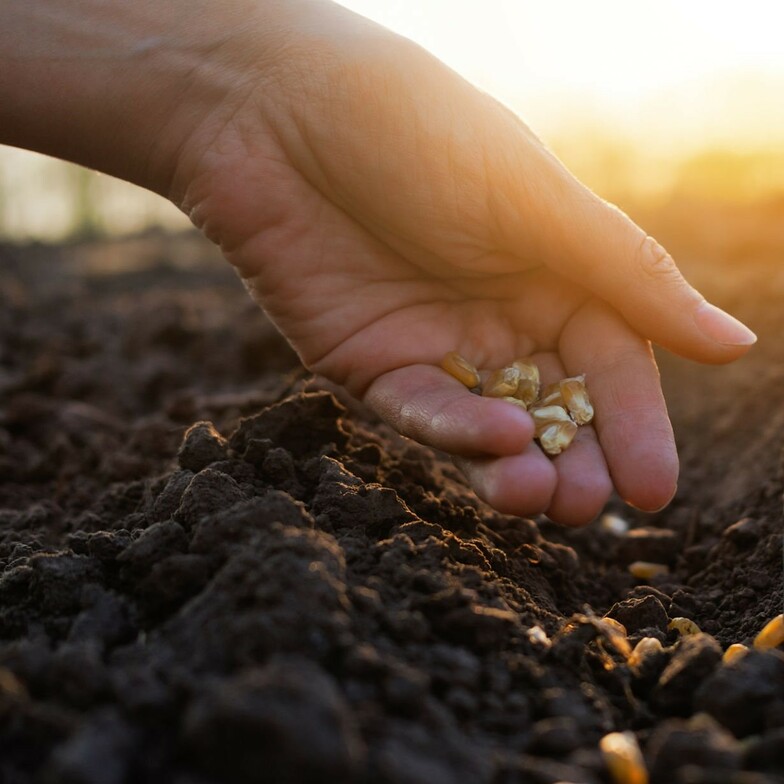
In Matthew 13:24–30, 36–43, Jesus tells of a farmer who plants good seed in his field. During the night, an enemy comes and plants weeds among the wheat. When both begin to grow, the servants ask the question we might ask: “Where, then, did these weeds come from?”
They want to remove them immediately, but the farmer warns that pulling up the weeds could also uproot the wheat. He allows both to grow until the harvest, when they will finally be separated. Jesus does not give us a simple explanation that makes tragedy understandable. The parable does not tell us that God created evil or that suffering is secretly good. The enemy plants the weeds—not the farmer. Evil stands opposed to God’s will and to the goodness God desires for creation.
Yet God created human beings with genuine freedom. That freedom makes love, faithfulness, and moral responsibility possible, but it can also be misused to harm, exploit, and destroy. Sin does not affect only one person or one decision. It can spread through families, communities, organizations, and even entire nations. As it spreads, good and evil can become so mixed together that fixing the problem is rarely as simple as we would like it to be.
The parable also gives us a promise: evil will not remain forever. A harvest is coming, justice belongs to God, and the weeds will not have the final word.
Until then, we are not called to ignore evil or passively accept suffering. We are called to protect those who are vulnerable, confront injustice, cultivate what is good, and resist evil without allowing hatred to transform us into what we oppose.
We may not be able to explain every weed in the field, but we can decide what we will grow. As Kingdom people, we trust God with final judgment while faithfully planting mercy, justice, courage, and love.
With much love,
-Pastor Brian

-
BCC-Home Location
Office Hours
Contact
© 2026 Brookfield Congregational Church. All Rights Reserved.
|
Login
powered by
Website Developed by Tithely